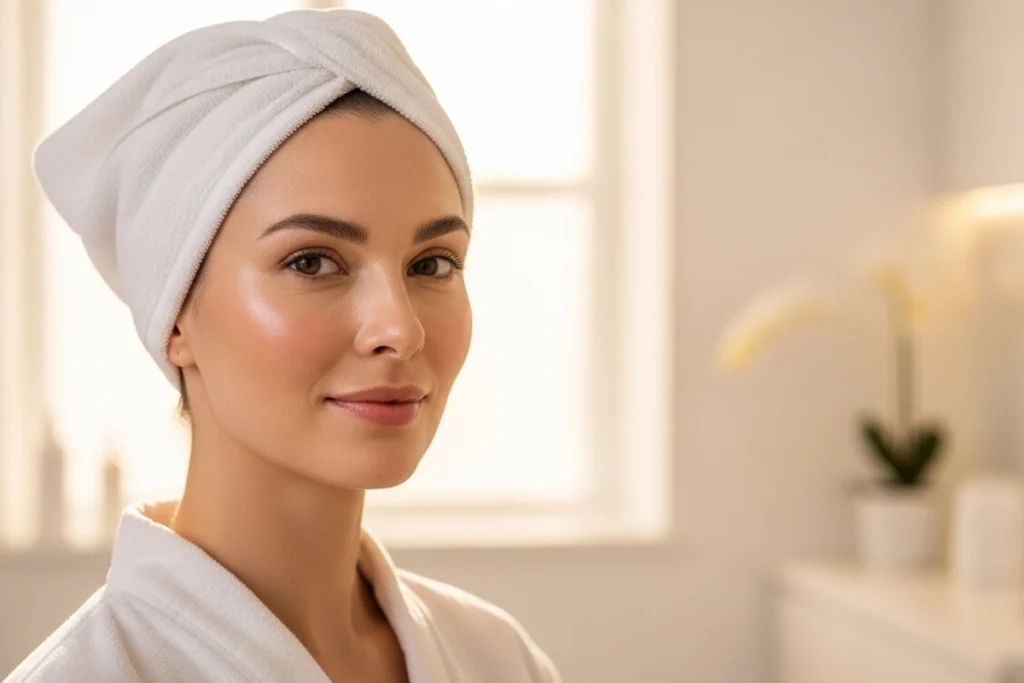
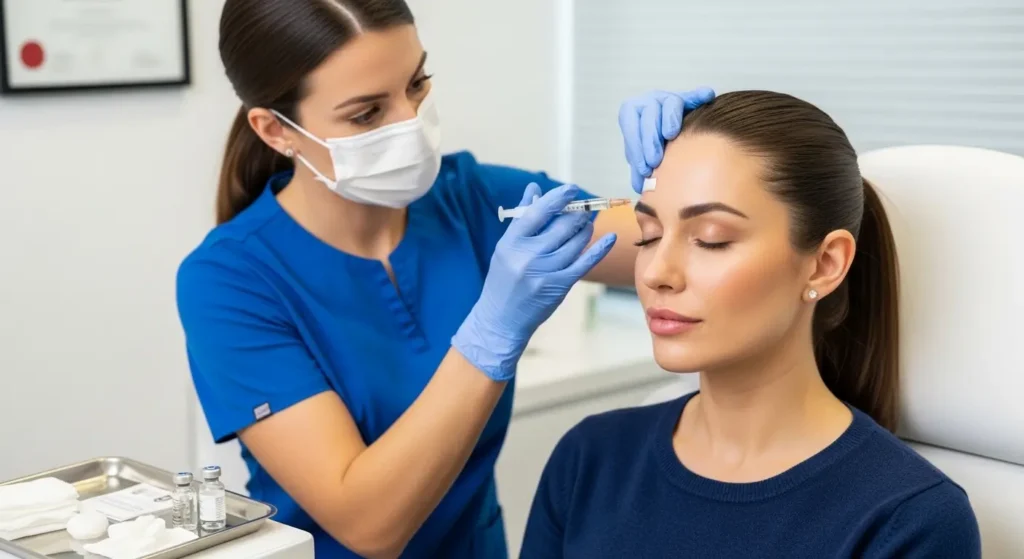
Facials can improve your skin because they combine professional cleansing, controlled exfoliation, targeted treatment, and hydration in a way that is difficult to replicate at home. When performed correctly and matched to your skin type, they support smoother texture, clearer pores, and healthier overall skin function.
Improvement is not magic. It comes from structure. Each step in a facial serves a purpose, and together those steps address buildup, congestion, dehydration, and early signs of aging in a controlled way.
How Professional Facials Remove Deep Buildup From the Skin
Daily cleansing removes surface dirt and oil, but it often does not fully clear sunscreen residue, environmental particles, and compacted sebum inside pores. Over time, that buildup contributes to dullness and uneven texture.
A professional facial uses layered cleansing and skin prep techniques that go beyond a basic wash. This deeper reset helps improve clarity and allows your at-home products to absorb more effectively afterward.
When skin is properly cleansed at a professional level, it tends to look brighter and feel smoother almost immediately.
Why Controlled Exfoliation Improves Skin Texture and Tone
Dead skin cells accumulate naturally. When they are not removed consistently, the surface of the skin can appear rough, uneven, or flat.
Facials include controlled exfoliation, which may involve enzymes, mild acids, or physical methods chosen specifically for your skin type. Controlled exfoliation improves texture by removing surface buildup without over-stripping the skin.
The result is smoother skin, better light reflection, and a more even appearance over time.
How Professional Extractions Improve Pore Clarity
Blackheads and clogged pores are common, especially in oil-prone areas. Many people attempt to remove them at home, often leading to irritation or post-inflammatory marks.
Professional extractions are performed with proper tools and technique. When done correctly, they reduce congestion without excessive trauma to the surrounding skin.
Clearer pores not only improve appearance but also reduce the likelihood of recurring breakouts in the same area.
Why Hydration During a Facial Improves Skin Appearance
Skin that lacks hydration can look tired and feel tight, even if it produces oil. Dehydration affects how light reflects off the surface, making fine lines and texture more visible.
Facials often incorporate humectants, barrier-supporting ingredients, and occlusive layers that temporarily restore water balance. When hydration improves, skin appears fuller, smoother, and more refreshed.
While some of that effect is immediate, consistent hydration support can improve skin resilience over time.
How Facials Support the Skin Barrier
The skin barrier protects against irritation, environmental stress, and moisture loss. When the barrier is compromised, skin becomes reactive, dry, or inflamed more easily.
A well-designed facial does not just exfoliate. It also reinforces the barrier with ingredients that calm and strengthen the outer layer of the skin. This is especially important for individuals using active ingredients like retinoids or exfoliating acids at home.
Stronger barrier function means skin tolerates products better and shows fewer signs of irritation.
Why Targeted Ingredients in Facials Deliver Better Results
Professional facials often use higher-quality formulations or combinations of ingredients that are applied in a structured order. The difference is not just the ingredient itself, but how and when it is applied.
For example, exfoliation may be followed immediately by calming or hydrating agents to balance the skin. This sequence improves absorption and reduces unnecessary stress.
When ingredients are layered intentionally, results tend to be more predictable.
How Regular Facials Improve Long-Term Skin Health
One facial can make skin look refreshed. Regular facials support longer-term improvement by maintaining clear pores, managing buildup, and reinforcing hydration.
Consistency matters more than intensity. Moderate, well-timed treatments tend to produce better long-term results than aggressive, infrequent procedures.
Over time, this consistency can improve tone, texture, and overall skin clarity in a gradual and stable way.
Why At-Home Skincare Alone Is Sometimes Not Enough
At-home routines are essential. However, there are limits to what daily products can accomplish. Most people do not exfoliate as precisely, extract safely, or layer ingredients as effectively as a trained professional.
Facials do not replace home care. They complement it. The combination of structured professional care and consistent at-home maintenance typically delivers better results than either alone.
When Facials Improve Skin and When They Don’t
Facials improve skin when they are matched to the correct skin type and concern. They can be less helpful — or even irritating — if they are too aggressive, too frequent, or not aligned with what your skin needs.
Over-exfoliation, harsh extractions, or stacking too many active treatments can disrupt the barrier and cause setbacks. This is why customization and consultation matter.
The right facial improves skin. The wrong one can temporarily make it worse.
Frequently Asked Questions
Do Facials Really Improve Your Skin?
Yes. When matched to your skin type, facials can improve clarity, smooth texture, and hydration.
How Long Do Facial Results Last?
Immediate glow may last several days, while long-term improvements depend on consistency.
Can Facials Help Clogged Pores?
Professional cleansing and extractions can reduce congestion safely when performed properly.
Are Facials Good for Dry Skin?
Yes. Hydration-focused facials can improve moisture balance and barrier strength.
Can Facials Help with Acne?
They can support acne-prone skin when designed carefully and not overly aggressive.
How Often Should You Get a Facial?
Frequency varies by skin type, but regular maintenance often produces better long-term results.
Can Facials Damage Your Skin?
They can be performed incorrectly or too aggressively. Customization is essential.
Final Thoughts: Why Facials Can Be Worth It for Your Skin
Facials improve your skin because they address multiple factors at once: buildup, texture, hydration, congestion, and barrier health. When performed thoughtfully and consistently, they help maintain clearer, smoother, and more balanced skin.
The key is not chasing trends. It is choosing treatments that fit your skin and supporting them with a steady routine.